

By Geena Monahan—For the North Star Reporter
Editor’s note: This is the second part of the North Star Reporter’s two-part series with Caster Salemi.
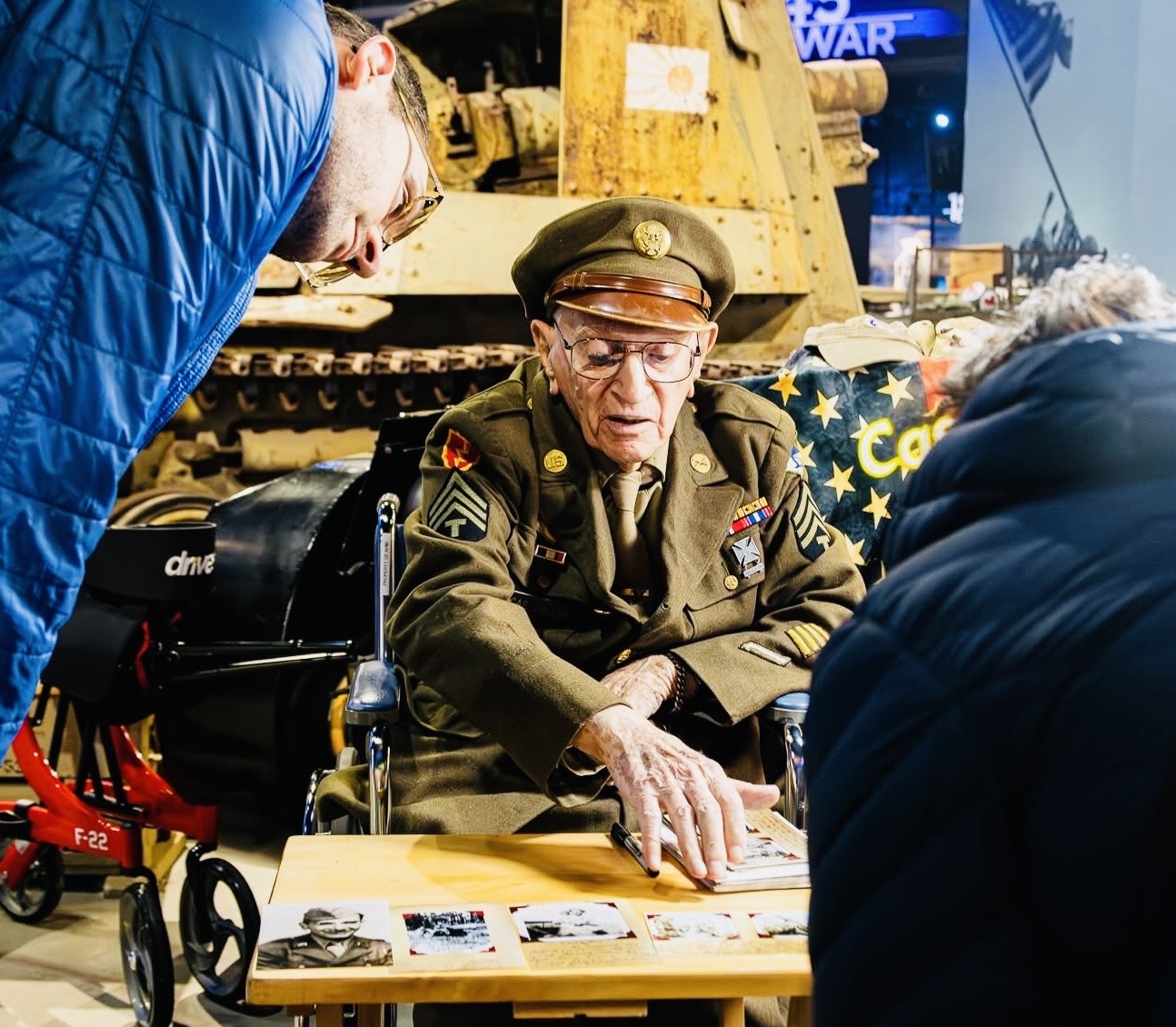
Although three years of Caster Salemi’s life — from 1943 to 1946 — were spent fighting in World War II, the other 101 have been spent watching America transform.
When asked what he thinks about witnessing 40% of the nation’s history, Salemi paused.
“Wow,” he said, smiling. “It’s mind-dazzling, really.”
The world Salemi was born into on June 14, 1922, bears little resemblance to the one he lives in today.
“My first car was a crank-start Model A Ford,” Salemi said. “The icebox is no longer an icebox — it’s a refrigerator. We don’t have gas lights anymore, we have electric lights. When you wanted to go somewhere, you took a ship. Now you take a plane. These are all things I’ve seen.”
Some of his earliest memories date to the Prohibition Era, when a speakeasy operated in his neighborhood.
“I remember people coming up and knocking on the door,” he recalled. “A little slot would open up.”
Then came the Great Depression.
Business slowed dramatically, and with seven children living in the back of the family’s Queens grocery store, money was scarce.
“We kind of lived off the stock in the store because people didn’t have money to buy groceries,” Salemi said. “I don’t remember how we all slept back there.”
Despite the hardships, he remembers a neighborhood where children played outside until dark and neighbors knew one another.
“Living on Long Island, you knew everyone on the block,” Salemi said. “Kids used to go out and play in the street. I suppose that’s because now both parents are working. Back then, only the father worked.”
Inventing tomorrow
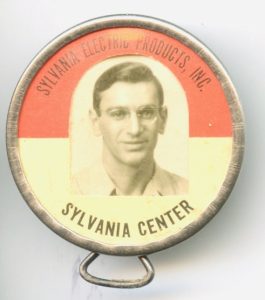
After returning home from the war, Salemi spent 39 years working in research laboratories for Sylvania Electric Products, later General Telephone and eventually Verizon, innovating technologies that became part of everyday life.
Among his projects was developing phosphors that dramatically improved color television displays, along with designing electron guns used in early television picture tubes and earning a partial patent related to automobile oxygen sensors
“The reds used to come out brown,” he said of the TV. “We finally came up with a phosphor that gave us the color we wanted. That’s when color television really took off.”
Salemi and his team also helped improve the ways banks process U.S. currency, developing ultraviolet-responsive inks that allow cash-counting machines to distinguish between different denominations.
“If you take a UV light,” he said, “you’ll see the different colors.”
Moments that changed America
A significant memory in Salemi’s life came while simply watching history unfold.
In July 1969, while vacationing with his family in New York’s Finger Lakes region, there were no televisions on site to watch the Apollo 11 moon landing.
Salemi and his son drove into the nearest town to buy more than 100 feet of wire, climbed to the highest point they could find and built a makeshift antenna. Soon, much of the resort had gathered around a 10-inch television to watch together.
“We actually saw them land on the moon,” he said.
More than three decades later, Salemi was visiting his sister, who was stationed in Germany while working for the Army, when terrorists attacked the United States on Sept. 11, 2001. Watching television from a hotel room in France, he initially thought he was seeing scenes from a movie.
“It wasn’t until the English version came on that I realized it was actually happening,” he said.
Commercial flights were grounded, leaving thousands stranded.
“I’ll give credit to the German people,” Salemi said. “They took a lot of people from the airport into their homes for two or three days before flights started again.”
The American Dream
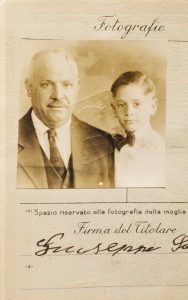
Although his service as an Army technical sergeant shaped much of his life, Salemi says his greatest accomplishment has always been his family, beginning with his parents’ decision to immigrate from Sicily in 1906 for a better life in America.
“My parents had to move here,” Salemi explained. “They didn’t have enough to live on in Italy at that time.”
Salemi married his first wife, Virginia, in 1949 after meeting her at dance lessons. They raised three children and were married for 37 years before her death in 1987.
“We went on all sorts of adventures,” he said. “We had a great time raising our kids.”
Salemi later remarried in 1990 and moved to North Attleborough. When his second wife became ill shortly after they married, he spent the next decade caring for her while remaining active in nearby veterans groups.
“I’m proud of my family,” he said. “What they’ve added to this country. They’ve helped in many ways. That’s how I’d like to be remembered.”
Lessons from a century
Salemi said one of life’s greatest lessons came during basic training in Texas, where recruits from every corner of the country learned to rely on one another.
“Some couldn’t read or write,” he recalled. “Some had never worn shoes. We would read their letters and write letters home for them. They were totally different than us, but we learned how to live together. We learned how to get along. And it was great.”
Asked the secret to reaching 104, Salemi shrugged.
“I think it’s genes,” he said. “I try to live without stress. We lived on a Mediterranean diet. No smoking. No heavy drinking. Just occasional wine.”
He also credits staying active through physical therapy, chair yoga, trivia at the Senior Center, veterans events and time with family and friends.
“I have to keep moving,” he said. “If I don’t do something for too long, it becomes a chore to get back into it.”
As the nation celebrates its 250th anniversary, Salemi hopes younger generations appreciate not only how much America has changed, but also the opportunities it continues to offer.
“If you get the opportunity, join one of the services,” he said. “There’s nothing better than being in the Army or Navy. You learn how to deal with people from all kinds of backgrounds. You learn to depend on each other, and you’ll never regret it.”
Salemi offered one final thought.
“You can’t take America for granted.”