

By Geena Monahan—For the North Star Reporter
For nearly two decades, the roar of Ramses could be heard beyond the gates of Capron Park Zoo, becoming a familiar sound to generations of visitors.
On Friday, Aug. 7, the zoo announced the death of the beloved 20-year-old African lion, who was humanely euthanized following a decline in his quality of life.
Ramses had been placed under hospice care on July 30 as staff monitored age-related health issues. At 20, he had far surpassed the typical 10- to 13-year lifespan of a lion in the wild and was considered one of the oldest male lions living at a zoo accredited by the Association of Zoos and Aquariums.
“We are very proud of his care here at the zoo and find peace in knowing that he lived such a long and wonderful life under our care,” zoo Curator Casey Ribeiro told the North Star Reporter.
Ramses arrived in Attleboro as a young lion after longtime zookeeper Lino Ribeiro traveled to New York’s John F. Kennedy International Airport to retrieve him, following his flight from a zoo in Johannesburg, South Africa, that was closing.
Ramses was about a year and a half old and weighed approximately 417 pounds when he arrived.
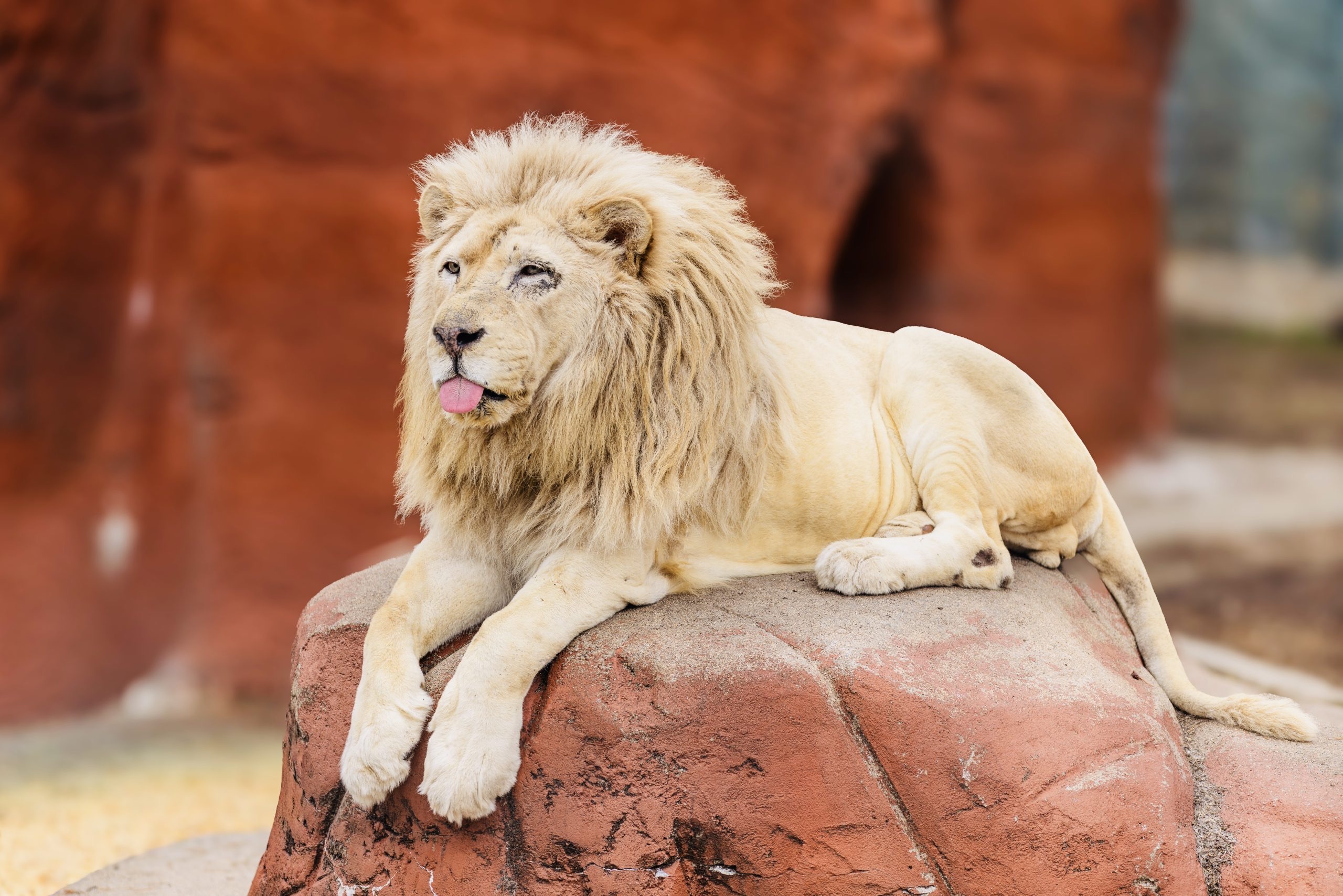
“He didn’t have the beautiful, luscious mane he has now,” Lino Ribeiro recalled during Ramses’ 20th birthday celebration July 1. “He had these little mutton chops and a mohawk. He was a lot leaner.”
Over the years, those who cared for him came to know a more playful side of the big cat.
“We joke that he’s a goofball,” Lino Ribeiro said in July. “He loves his toys and his treats. To this day, he still plays with them.”
Ramses was a white lion, a rare color variation caused by a recessive genetic trait known as leucism, an abnormal condition of reduced pigmentation affecting various animals, marked by overall pale color or patches of reduced coloring. His name means “sun-born,” according to the zoo.
He shared his home over the years with female lions Kayla and Nyalla. After both died, Ramses settled into life alone, something zoo officials said mirrored the natural progression of male lions in the wild.
In announcing his death, the zoo remembered Ramses, not only as a fixture at Capron Park Zoo, but throughout the city of Attleboro.
“Ramses was a magnificent lion,” the zoo said in a statement. “Not only was he often seen as the face of Capron Park Zoo, but also of Attleboro itself as his roar echoed across the zoo and out into the community each day.”
Care in his final years
As Ramses aged, his care became increasingly specialized and tailored to his changing needs.
In recent years, he developed arthritis, and by late July, staff noticed declining comfort and mobility in his back legs, as well as less interest in some of his favorite foods.
Those changes prompted the zoo to transition Ramses to hospice care, with a focus on maintaining his comfort, dignity and quality of life.
During his final days, animal care and veterinary staff held daily discussions about his health and used a welfare assessment to evaluate factors, including his physical condition, mobility, activity level and food consumption.
Casey Ribeiro said the changes were expected given Ramses’ age and steady decline in his overall health.
When staff determined his quality of life had declined further, they made what the zoo described as an “extremely difficult, but compassionate decision” to humanely euthanize him.
Ramses’ death will provide a learning opportunity for future veterinarians. The zoo is working with the pathology department at Tufts University’s Cummings School of Veterinary Medicine to use his necropsy as an educational experience for veterinary students.
This also closes a chapter in Capron Park Zoo’s history.
As its lions aged, animal care standards surrounding exhibit size evolved, according to zoo officials. While the zoo hopes to bring lions back to Attleboro someday, officials said a new, larger exhibit would be needed.
For now, Ramses’ former exhibit will be repurposed for another species, which has not yet been determined.
“While our hearts are heavy, we take a bit of comfort in knowing that Ramses’ final chapter was guided by compassion, dignity, and an unwavering commitment to his well-being,” the zoo said. “We know he held a special place in the hearts of so many in our community.”