

By Geena Monahan—For the North Star Reporter
Massachusetts has closed a legal gap that prevented prosecutors from pursuing some sexual assault cases after DNA testing identified suspects years or even decades after the alleged crime occurred.
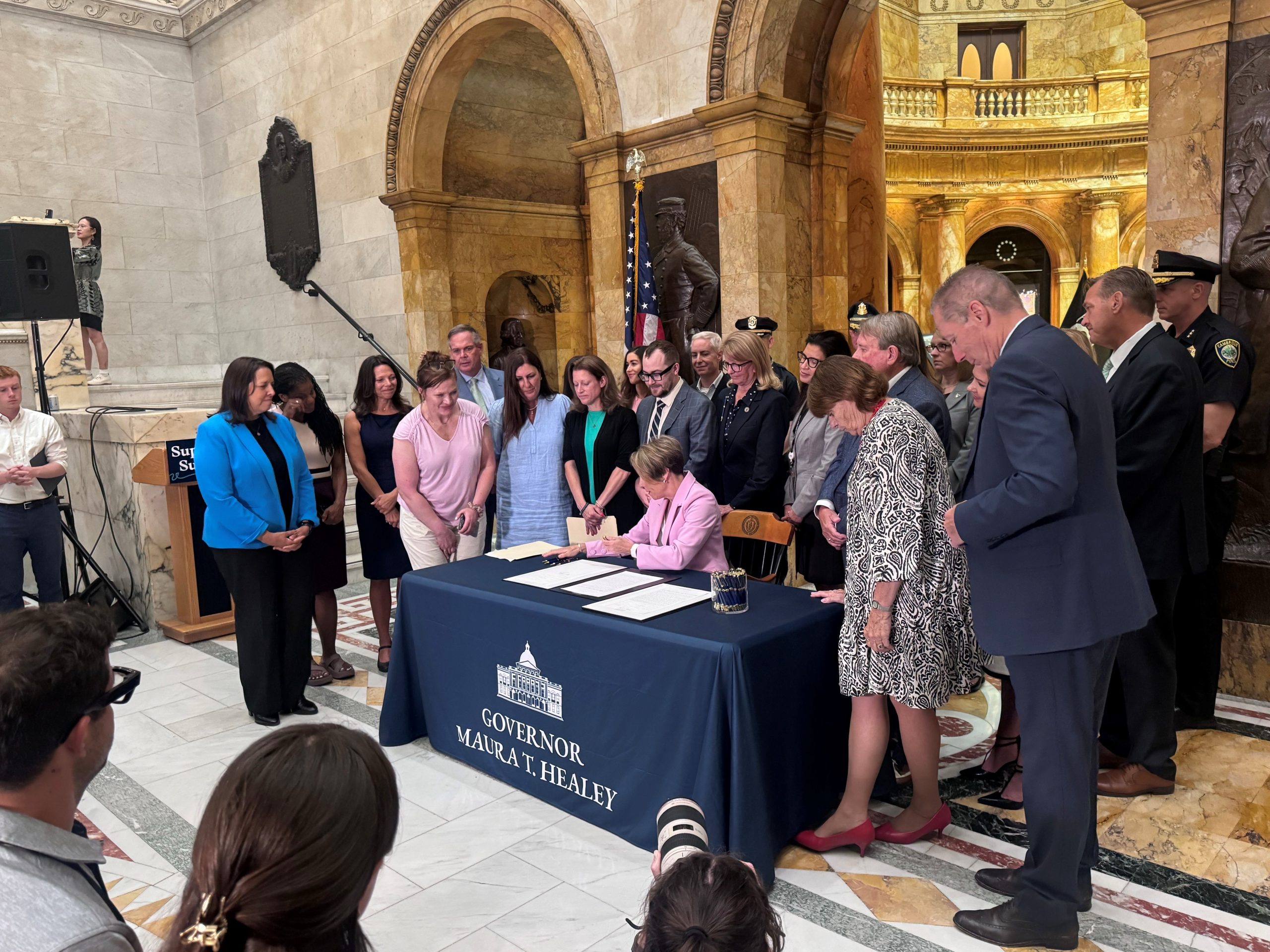
Gov. Maura Healey joined lawmakers, survivors and advocates July 24 to commemorate the signing of the new DNA exception rule, a measure championed by state Rep. Adam Scanlon (D-North Attleborough). The provision was included in the fiscal year 2027 state budget, which Healey signed into law July 9.
The new law allows prosecutors to bring sexual assault charges when DNA evidence identifies a suspect after the state’s standard 15-year statute of limitations has expired. Previously, those cases could not move forward once the deadline had passed, even if advances in forensic science later identified a suspect.
“As a former prosecutor and attorney general, I spent years working alongside survivors of sexual violence,” Healey said in a statement. “I saw firsthand the trauma they carry, and the extraordinary courage it takes to come forward. I also saw the devastation caused when our laws don’t do enough to protect survivors and hold offenders accountable. These new laws close dangerous loopholes, strengthen protections for children and make sure survivors have a better opportunity to seek justice.”
Scanlon said he became aware of the issue during his first term in 2021. North Attleborough resident Katelyn Scammon had approached him about what she believed was a gap in Massachusetts law. Her experience drew attention to cases in which DNA evidence identifying a suspect came about after the statute of limitations had expired.
Scanlon filed legislation creating a DNA exception that year and refiled it during the next two legislative sessions. Along the way, survivors from across Massachusetts testified before lawmakers, sharing their stories and advocating for the change.
Scanlon credited law enforcement and advocacy organizations, including RAINN and the Joyful Heart Foundation, with helping move the measure across the finish line.
“Today is a great day for justice,” Scanlon said during the ceremonial signing. “I am honored to have worked with all the survivors who came forward to tell their stories and push for this change, starting with my friend and constituent Katelyn and including all the other survivors who were such strong advocates in this process. You can be very proud of what you have accomplished, helping law enforcement get dangerous perpetrators off the streets and helping survivors get justice.”
Closing a legal gap
A 2016 law required sexual assault evidence kits to be preserved for at least 15 years, and legislation enacted in 2021 required the vast majority of previously untested kits to be analyzed within 180 days. As more evidence was tested, investigators began identifying suspects years — and, in some cases, decades — after the alleged assaults occurred.
According to Scanlon’s office, a 1989 sexual assault case in Framingham resulted in a conviction only because the suspect had left Massachusetts, pausing the statute of limitations. In other cases, charges were dismissed despite DNA identifying a suspect because prosecutors were legally barred from filing charges.
Shannon Hogan, a survivor who previously served as director of the Boston Police Department’s Sexual Assault Kit Initiative, said her team identified five serial offenders and helped bring closure to more than 30 survivors in less than two years. But one survivor waited 17 years for charges that ultimately could not be filed because the statute of limitations had expired.
“This was devastating,” Hogan said in a statement. “In spite of this tragedy, she was determined to tell her story so others would not endure the same fate.”
According to Scanlon’s office, 35 other states already have some version of a DNA exception rule or no statute of limitations for felony sexual assault crimes.
“The state’s work to test evidence is yielding results and identifying perpetrators,” Scanlon said. “A DNA exception rule allows law enforcement to act on these results.”
The DNA exception rule was one of two criminal justice measures highlighted during the July 24 ceremony. Healey also recognized a new law closing a loophole that had allowed adults in positions of authority — including teachers, coaches, police officers, social workers and other mandated reporters — to argue that 16- and 17-year-olds consented to sexual conduct.
The new law makes clear that minors younger than 18 cannot legally consent to sexual conduct with someone who has exercised authority over them, even if that position of authority has ended.
Since taking office, Healey has also signed legislation criminalizing sexual assault by fraud committed by a medical professional, expanding the legal definition of abuse to include coercive control, banning revenge pornography and increasing state support for domestic violence and sexual assault services.
For Scammon, the bill’s signing marked the culmination of years of advocacy.
“I am forever grateful to Rep. Scanlon, members of the Legislature, Gov. Healey, survivors, advocates and supporters who all came together and refused to give up,” Scammon said in a statement. “This sends a very powerful message that justice should never have an expiration date, and that survivors deserve to be heard no matter how much time has passed.”