

By Geena Monahan—For the North Star Reporter
The ongoing effort to dredge the Ten Mile River and reduce chronic flooding in town moved a step forward after state Rep. Adam Scanlon secured a $5.275 million amendment to a state economic development bond bill.
If approved as part of the final legislation, it would bring total bond authorizations dedicated to the dredging to about $10.275 million. This is combined with a previously authorized $4 million bond authorization and another $1 million from separate legislation, according to Scanlon.
The authorization does not provide money directly to the town. Instead, it allows the state to borrow money for the project if the Healey administration decides to release the funding.
“There’s two types of spending bills,” Scanlon said. “One is where cash is appropriated directly through the budget. The other is a bond bill, where the state essentially borrows money to finance a project.”
Rather than seeking entirely new borrowing authority, Scanlon said the amendment redirects bond authorizations previously approved for local projects that received funding elsewhere or were paid for by the town.
Among those was work done on Kelley Boulevard, which later received a MassWorks grant, and a proposed playground at Amvet Boulevard School that was funded locally.
“So we’ve had $5.275 million previously authorized for these projects, and we don’t need them anymore,” Scanlon said. “Something we do need is dredging the Ten Mile River.”
He said adding those unused authorizations to previous dredging authorizations strengthens the town’s position when requesting the Healey administration to release the funding.
A decades-old problem
Flooding along the Ten Mile River between the Plainville town line and Falls Pond has challenged North Attleborough since the 1930s.
Over the years, engineers have studied numerous solutions, including repairing retaining walls, removing sediment from the riverbed, reducing stormwater runoff and modifying operations at Falls Pond Dam. The town has completed several flood mitigation projects over the years, but officials have acknowledged those efforts have not fully solved the problem.
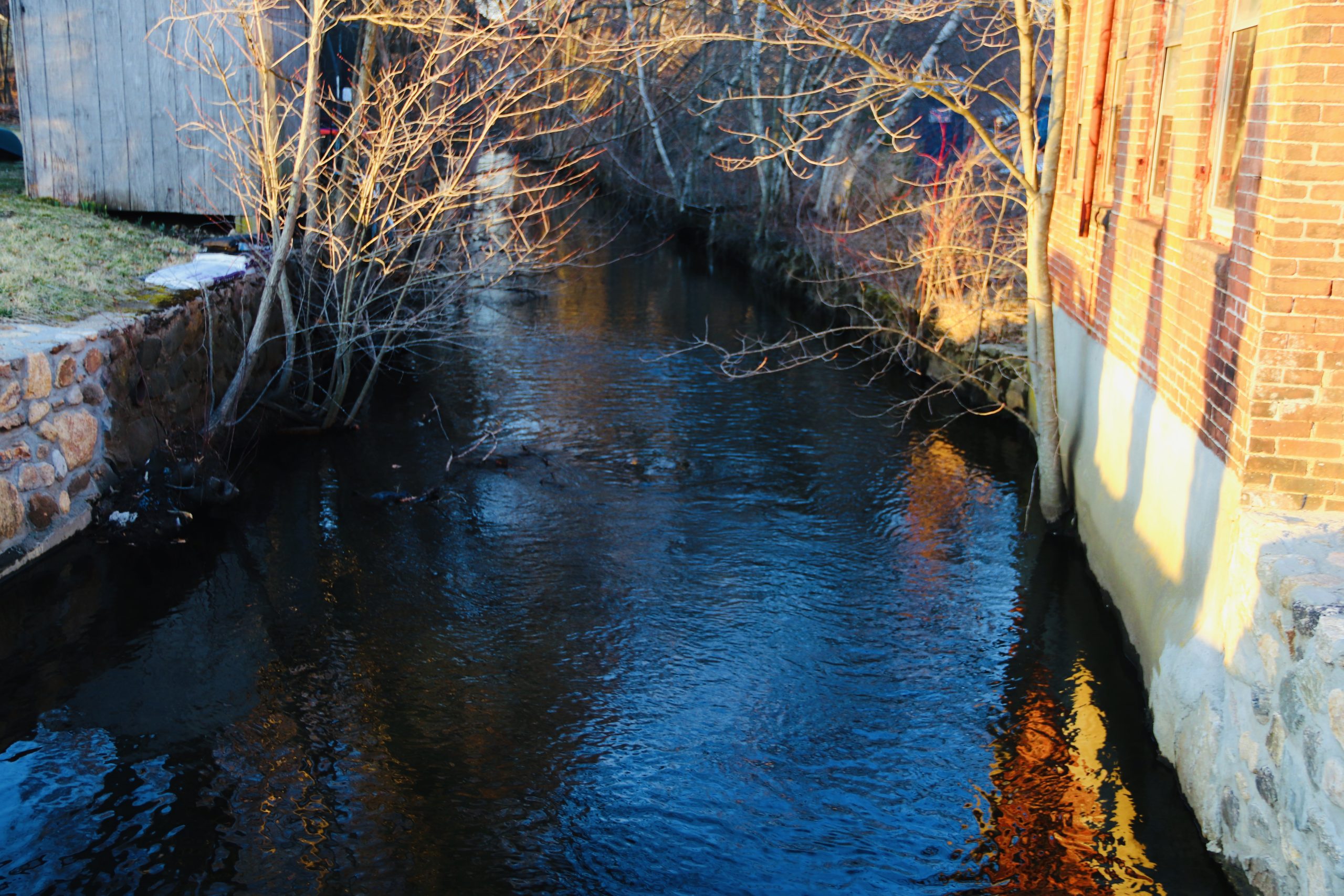
Plans for the dredging project call for removing accumulated sediment along approximately 9,200 feet of the river between Whiting’s Pond and Falls Pond, restoring two overflow ponds, repairing stone retaining walls and improving the river’s capacity to carry stormwater.
Town officials have previously said the project would help reduce repetitive flooding that has damaged homes and businesses, while improving emergency access to the downtown area. The police and fire departments are located near the river.
The project also aims to address environmental concerns by removing decades of accumulated sediment and improving water flow.
In 2022, North Attleborough received a $1.5 million federal earmark secured by Congressman Jake Auchincloss to support the design and dredging effort.
That same year, the town received a FEMA Pre-Disaster Mitigation Grant to revisit previous flood studies and develop an updated long-term strategy for reducing flooding throughout the watershed. The study evaluates both short- and long-term improvements while incorporating updated rainfall data and projected impacts from climate change.
According to information published by the town, extreme precipitation events in the Northeast have increased by about 60% over the past 50 years. National Oceanic and Atmospheric Administration data shows projected rainfall amounts for major storms have increased significantly and are expected to continue rising in the coming decades.
Looking ahead
Scanlon said the Ten Mile River presents a stronger case for state investment than many local projects because it affects multiple communities, including North Attleborough, Attleboro, Plainville and Seekonk.
The extensive flooding in 2023 also underscored the need for a long-term solution, he said.
“We hope the administration sees the importance and that it’s prudent to borrow this money because it will lead to economic development, mitigate flooding throughout the region and protect homes and businesses,” Scanlon said.
He acknowledged the overall cost of the project has likely increased since earlier estimates because of inflation and additional funding could still be needed. However, he said broader environmental bond accounts could provide flexibility if the project requires more than the currently authorized amount.
“Our goal is to say, ‘We’ve identified at least $10 million for this project. Can we start to get some shovels in the ground to dredge this river?'” Scanlon said.