

By Geena Monahan—For the North Star Reporter
At a recent meeting of the Economic Development Subcommittee, Town Manager Michael Borg outlined a plan to balance housing with commercial growth to protect the town’s long-term fiscal health.
“Growth is going to happen,” said Borg at the Feb. 25 meeting. “Our role is to shape it.”
A housing-heavy pattern
Nearly 500 housing units are under construction or approved in North Attleborough, including the Marcus Partners development on Kelley Boulevard and several others. About 90% of recent applications before town boards have been residential, Borg said, and only two include an affordable housing component.
Commercial growth, meanwhile, has largely been service-based — fitness centers, child care facilities and similar businesses — rather than light manufacturing, technology or industrial employers that generate higher wages and broaden the tax base.
“We’re not seeing high-paying, technology-based, engineering-type jobs,” Borg said. “Housing is driving the market.”
The imbalance has fiscal implications. Borg said roughly 87% of the town’s tax levy comes from residential taxpayers, and only 13% from commercial and industrial properties. While the town has one of the lowest commercial tax rates in the area, it has not led to significant business expansion.
“If we rely on housing alone,” he said, “we increase pressure on municipal services and shift more of the burden onto homeowners.”
Balancing growth
To Borg, housing and economic development are intertwined.
“A strong economy requires housing, and a sustainable housing market requires a strong economy,” he said.
His goal, he told members, is not to stop development, but guide it in a way that preserves local control and prevents the town from becoming a “bedroom community” overly dependent on residential taxes.
Borg acknowledged that the town faces real constraints. Industrial land is limited, portions of the Route 1 retail corridor are aging, and commercial demand has shifted in recent years.
At the same time, Borg said North Attleborough holds strong regional advantages: access to Interstate 95 and Routes 295 and 495, proximity to commuter rail stations in Mansfield and Attleboro, and a position within a broader economic corridor stretching from Gillette Stadium to T.F. Green Airport.
A coordinated strategy
To respond, Borg outlined a three-part framework: a directed housing strategy, an economic development strategy and coordinated land-use and infrastructure planning.
“These efforts have to work together,” he said. “Not independently.”
Central to that effort is the proposed multi-use overlay zoning district, expected to be in place by the end of the fiscal year. The overlay would encourage redevelopment in aging commercial areas — particularly along Route 1 — while channeling housing into planned locations and supporting mixed-use, walkable development.
Borg said the town is reviewing updates to a bylaw that would only allow new auto dealerships by special permit, along with redevelopment initiatives for key sites, and potential partnerships or incentives to attract targeted industries such as advanced manufacturing and technology-related firms.
“We are not looking at large swaths of untouched land,” he said. “This is about redevelopment. We’re going to have to be strategic.”
The 40B challenge
A major factor shaping the town’s strategy is its status under Chapter 40B, the state’s affordable housing law.
North Attleborough has not reached the state’s 10% affordable housing threshold, meaning developers can pursue projects that override local zoning. The town’s current affordable housing inventory stands at about 2.9%.
“A 40B could come right into the middle of an industrial area we’re trying to market,” Borg said.
He emphasized that 40B developments are tied to area median income and typically function as workforce housing, not traditional subsidized housing. Still, without a proactive plan, Borg said housing could be built in locations that strain infrastructure or conflict with long-term economic goals, leaving the town with limited negotiating leverage.
“If we do nothing, the market forces will make those decisions for us,” he said. “We get a say — but only if we use the tools available.”
Subcommittee members acknowledged that reaching the 10% threshold would require significant housing production. Chair Keith Lapointe noted that with a population of roughly 31,000, the increase could mean hundreds of additional units and a substantial influx of new residents.
“That’s a lot of people,” Lapointe said, adding that the town must be honest about the scale of change.
Borg responded that certain 40B developments allow a town to receive credit for all units in a project — not just the affordable portion — potentially accelerating progress toward the 10% threshold. The broader question, he said, is whether the town would prefer to guide that growth or risk having it dictated by outside proposals.
Town Council member Laura Wagner added that apartment-style developments often attract young professionals and do not necessarily increase school enrollment, noting that the town needs only 798 additional units to reach the 10% threshold.
Key sites and next steps
Borg also pointed to several town-owned properties that could factor into the broader strategy, including the Allen Avenue parcel and Courtois site, which he said the town is “about to complete a major cleanup on.” Decisions about those sites, he said, should align with long-term planning and include resident feedback.
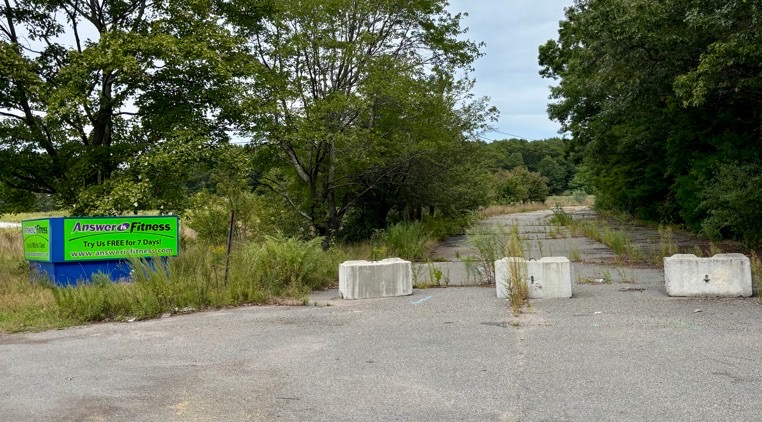
In response to a question from subcommittee member Kevin McCarthy, Borg said no agreement has yet been reached regarding the former Answer Is Fitness property on John Dietz Boulevard, which has been discussed as a potential location for another housing development.
In the coming fiscal years, Borg said the town plans to advance the mixed-use bylaw, develop a formal affordable housing strategy, analyze the fiscal impacts of various development types and pursue business attraction efforts and grant opportunities.
“This is an opportunity for North Attleborough to become a regional hub for business and innovation,” Borg said. “But we have to align and prioritize the right efforts.”