
By Geena Monahan—For the North Star Reporter
For the first time in the department’s history, North Attleborough Police will have a dedicated mental health clinician responding alongside officers to crisis calls, a move officials say marks a significant shift in how the town approaches public safety and behavioral health.
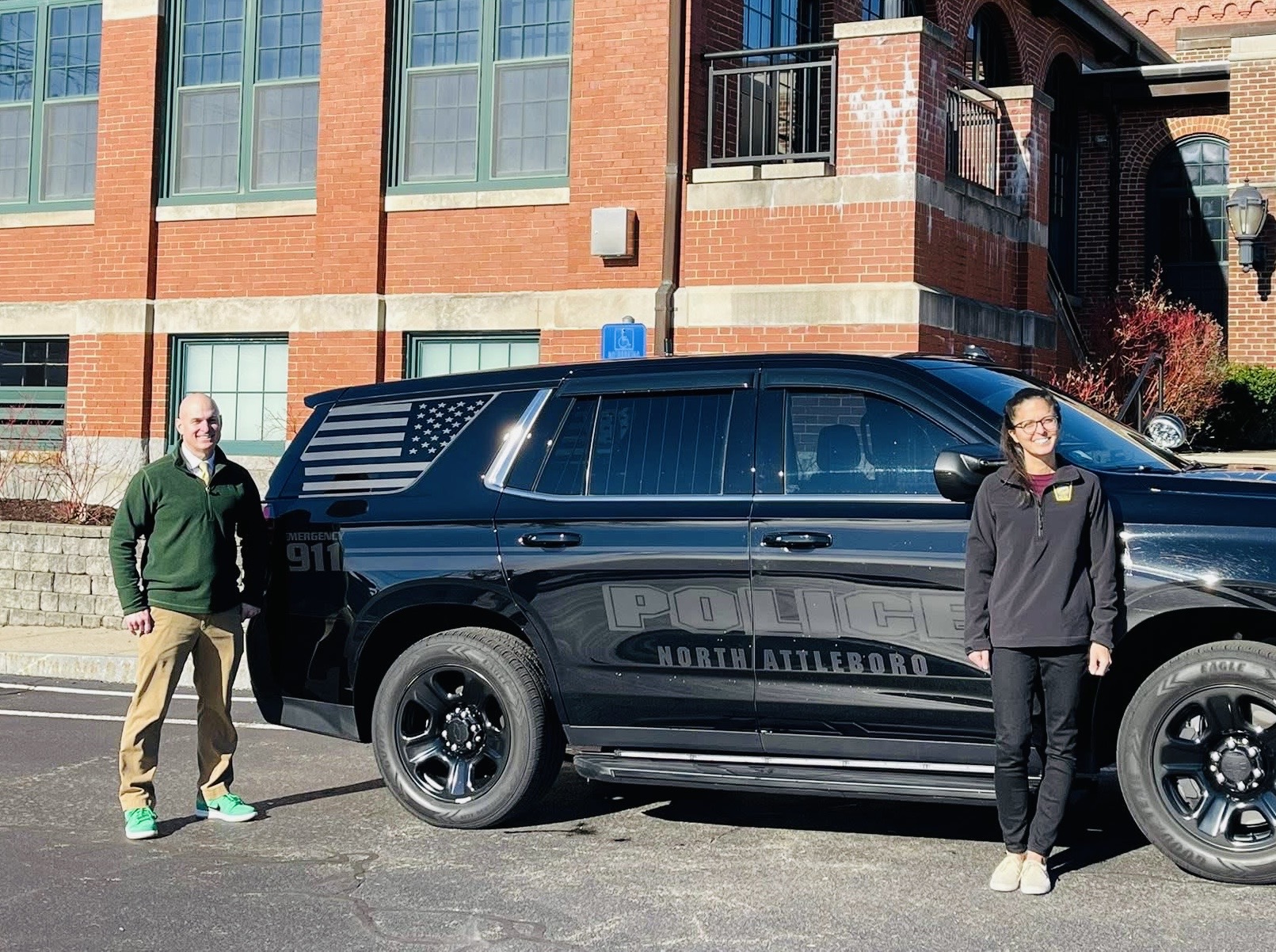
Police Chief Richard McQuade, saying he was “very proud and honored,” announced Sonja Wagner as North Attleborough’s first co-response mental health clinician at the Monday, March 23, Town Council meeting, following a months-long hiring process that drew 20 applicants.
After narrowing the pool to eight candidates and conducting interviews in December with a panel that included behavioral health experts, police leadership and human resources staff, Wagner emerged as the clear choice, McQuade said.
“It was apparent that Sonja carried the day,” he said.
Wagner brings several years of direct experience in the co-response model — including helping launch similar programs in other Massachusetts communities.
Her career began in Natick, where she worked in a co-response program under the supervision of a behavioral health specialist affiliated with William James College. From there, she went on to work in Marlborough and most recently Franklin, gaining experience responding to a wide range of mental health and substance use calls alongside police.
“I started my career in 2019 in Natick,” Wagner said. “I started their co-response program there … and I’ve worked in a few different communities since.”
That background, officials said, was a key factor in her selection, particularly as North Attleborough builds the program from the ground up.
McQuade said he initially felt “a little nervous” about hiring for a role outside traditional law enforcement, but leaned on experienced behavioral health professionals to help guide the process.
“We wanted to make sure we got the right person,” he said.
A new approach to crisis response
The co-response model pairs a licensed mental health professional with officers responding to calls involving individuals in crisis, whether related to mental health, substance use or emotional distress.
“We complete our report, we make observations,” McQuade said. “But now we have another tool in the toolbox — a mental health expert — and that decreases the likelihood of a use-of-force situation.”
Wagner said her primary role will be to stabilize situations and connect individuals with appropriate services, rather than allowing them to cycle through emergency rooms or the criminal justice system.
“My main goal is de-escalation, keeping everyone safe on scene and connecting individuals to the appropriate resources,” she said. “When possible, we can divert from the emergency room, saving taxpayer dollars and helping people get the right care, whether that’s detox, outpatient therapy or another program.”
She will also be available for follow-up care and consultation, assisting officers in navigating complex situations.
“Our officers shouldn’t have to make those decisions by themselves,” Wagner said.
The position is funded entirely through North Attleborough’s share of a statewide opioid settlement, part of a broader agreement with pharmaceutical companies tied to the opioid epidemic.
“This is a great day,” Town Manager Michael Borg told councilors. “We’re advancing how we approach this program, but it’s important to note that this is fully funded outside the budget through opioid settlement funds — not taxpayer dollars for the foreseeable future.”
The town is expected to receive approximately $2.4 million over 14 years, with more than $700,000 already distributed and roughly $1.7 million still to come. Those funds are restricted for use in prevention, harm reduction, treatment and recovery efforts and helped drive the creation of the new clinician role.
Town officials, including Human Services Coordinator Stephen Berdos and the town’s Opioid Task Force, have spent the past two years evaluating how best to allocate the money, drawing on community feedback and models from surrounding communities. That process led to the creation of the co-response clinician position.
“The big winner here is not only the Police Department,” McQuade said, “but the community.”