

By Geena Monahan—For the North Star Reporter
As demand for vocational and technical education continues to rise across Massachusetts, Tri-County Regional Vocational Technical High School is using a $2 million state grant to expand one of its newest programs.
At Tri-County, school leaders said the Facilities Engineering and Sustainability program was launched two years ago after demand for trade programs such as plumbing, electrical, HVAC, carpentry and metal fabrication began exceeding shop capacity.
The funding is part of the Healey-Driscoll administration’s broader $70 million Career Technical Education capital grant initiative to expand career-connected learning opportunities statewide.
“These investments will help connect more students to the skills and training that employers across Massachusetts are looking for right now,” Lt. Gov. Kim Driscoll said in the announcement. “By expanding access to career technical education, we’re strengthening our workforce pipeline and creating more opportunities for students to step directly into in-demand careers.”
The grant will help fund construction of a standalone building near the school’s electrical and plumbing shops on Tri-County’s new campus. Superintendent Karen Maguire said the program was created after plans for the new high school were finalized in 2020, so there was no dedicated space for the shop. Students will move into the building in fall 2027.
“The problem is, it’s not in the schematic of the new building, so we needed to do something so these students have space to call their own once we move into the new building,” she said.
Maguire said the proposed space will function as both a classroom and hands-on training center, featuring heavy equipment simulators, sustainability systems and space tied to a future greenhouse and community garden project, supported through separate funding.
“We imagine an open garage-type of space with a classroom on the side of it,” Maguire said. “There’s simulators for excavation, backhoes and things like that that we got as a part of this grant, so we need a space for those.”
School officials said the building may also include systems designed to collect water runoff and even a wind turbine to reinforce the sustainability side of the curriculum. About 70 percent of the grant could be used toward construction costs, according to Maguire.
A rising demand
According to Maguire, the new program has helped create additional pathways for students interested in the trades, while easing pressure on existing shops.
Two years ago, roughly 70 percent of Tri-County’s freshman applicants selected the same five shops — plumbing, electrical, HVAC, carpentry and metal fabrication — creating waitlists and difficult placement decisions.
“That’s the hardest part for someone who’s been in this business for 30 years — I don’t like to tell kids ‘no, you can’t come,’” Maguire said. “Unfortunately, it’s the math of there’s only so many seats. You have to still keep the quality of what we offer and do so safely.”
Sophomore Ryan Wosny of Norfolk said he originally hoped to enter the carpentry program, but was instead placed in early education because of limited openings.
“When I was given the opportunity, I realized this was a good option,” Wosny said. “I love it and I’m glad I switched.”
For sophomore Josh Khristal of North Attleborough, the program offered a chance to explore several interests at once.
“I was stuck between several options of which shop I wanted to go for,” Khristal said. “When I got the opportunity to go into a shop that does them all, I said yes as fast as I could.”
A multi-trade approach
The Facilities Engineering and Sustainability program blends multiple trades into one curriculum. Students rotate through plumbing, electrical work, welding, metal fabrication and other systems-based learning while also gaining exposure to sustainability concepts and facilities management.
“We do a little bit of everything,” sophomore Aiden Barishian of Seekonk said. “It helps us get a better understanding of everything we’re doing at the shop.”
Students said the program’s hands-on structure also makes lessons easier to retain.
“Getting a chance to actually give it a try really helps me grasp the process,” Khristal said.
That practical learning extends beyond the classroom. The class regularly works alongside Tri-County Facilities Director Harry Takesian on maintenance and operations projects across campus.
“Anytime we have anything interesting going on, I try to grab all or some of them and give them a little exposure,” Takesian said. “It gives them real-life experience, on-the-job training.”
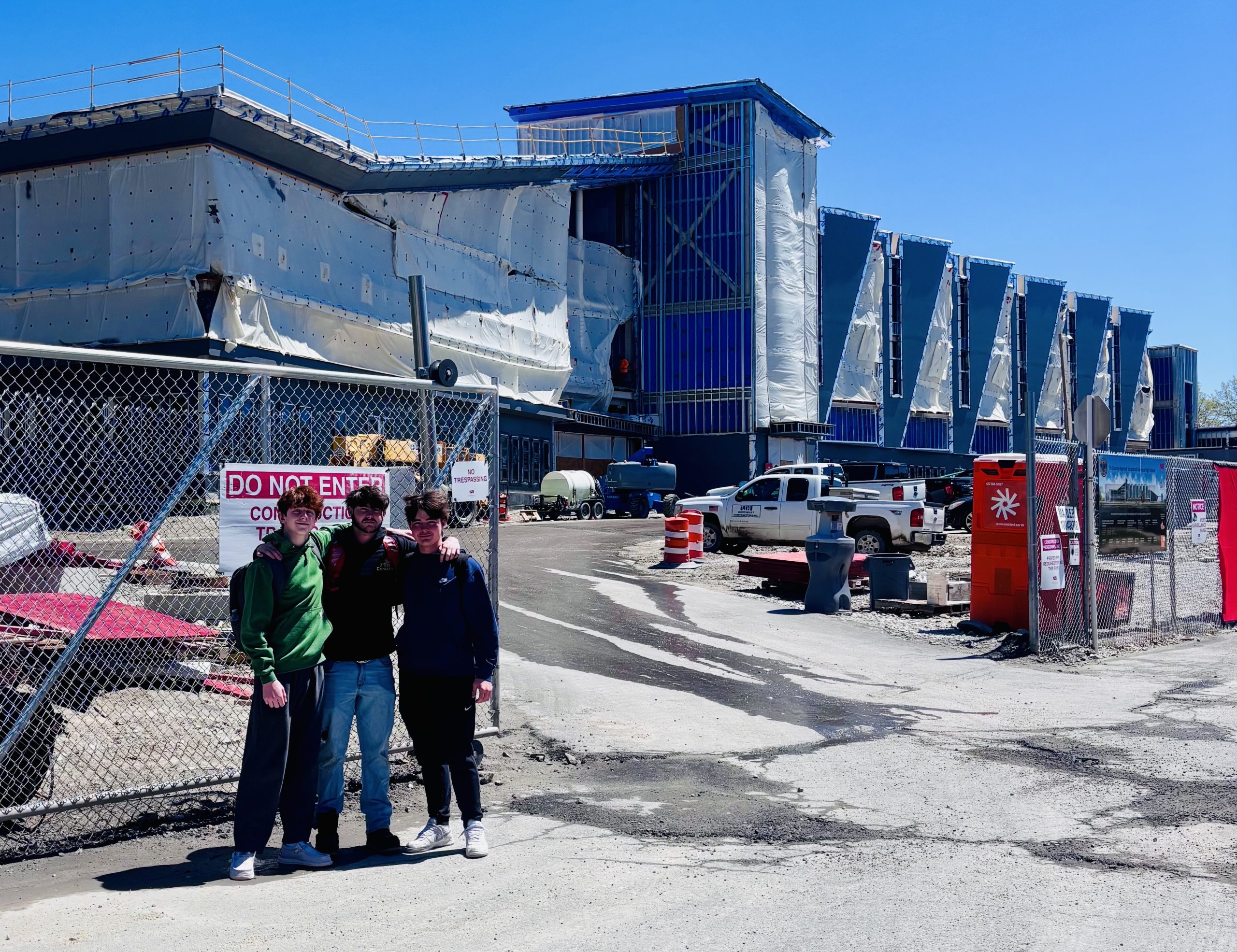
Principal Dana Walsh said the construction of the school’s new building has also become part of the learning experience.
“Our campus is also their learning lab right now,” Walsh said. “They’re able to get up on site and tour the new building and see what it looks like for a facility to rise.”
Students said they have toured the building during various stages of construction and spoken directly with project managers and contractors, giving them firsthand exposure to large-scale projects.
“The idea that we get to witness it and be the first class is really cool,” Wosny said. “The managers talk to us and tell us what they’re doing, and before they close up the walls, they let us come in and check everything out.”
The program has also taken on campus sustainability and operations initiatives, including a schoolwide cleanup and recycling effort dubbed “Junk It June.”
Expanding career pathways
School officials said the broader goal of the program is to prepare students for careers in facilities management, systems engineering, property management and the industrial trades.
“Students who graduate from this program could run their own property management company, go into landscape and design, systems engineering — there’s a million possibilities,” Maguire said.
The current sophomore class will become the first group of students to complete the program from start to finish, helping shape the shop as it continues to evolve.
“When I was coming into this shop, I thought I was mainly going to focus on plumbing,” Khristal said. “But talking with my teachers and realizing we’re going to have opportunities to get licensed to operate heavy equipment — that side of it really interests me. If I could get a job operating heavy equipment, I would do it in a heartbeat.”
Tri-County was one of 28 schools statewide selected for funding through the latest round of grants. Other recipients included Assabet Valley Vocational High School, which received $3.75 million to launch new public safety and veterinary science programs, and Norfolk County Agricultural High School, which was awarded $3.5 million. According to the administration, the statewide investment is expected to create up to 2,500 new career technical education seats.