

By Geena Monahan—For the North Star Reporter
As statewide concerns continue to swirl around MCAS performance and post-pandemic learning recovery, school leaders say the district’s data tells a more encouraging, though nuanced, story.
Assistant Superintendent Peter Haviland opened the School Committee’s discussion Tuesday, Jan. 13, by acknowledging the broader context surrounding MCAS results across Massachusetts, where many districts continue to struggle to regain academic ground lost in recent years. North Attleborough, he said, is not among the communities with those concerns.
“We took our time and put together information that helps translate what the DESE website says into a real conversation about how our students are doing,” said Haviland. “We’re in a position where we’re doing well. We see a lot of evidence of strong teaching and learning across the district.”
Haviland emphasized that work must continue to confront persistent challenges – particularly in math and science – and remain candid about existing gaps.
“A healthy district is one that knows its data and uses it honestly,” he said. “MCAS informs our work, but the goal is stronger learning across the entire system.”
Elementary instructional impact
Elementary-level data, presented by Roosevelt Avenue Elementary School Principal Jeannine Magliocco, highlighted what she described as a cohesive instructional approach across schools, alongside several success stories.
At Roosevelt, the 2024-25 third-grade class posted a 13-point increase in students meeting or exceeding the state average in math, rising from 55% the previous year to 68%. At Community Elementary, after three consecutive years in which just 28% of fifth-graders met or exceeded standards, last year’s cohort reached 48% – a 21-point increase Magliocco called “very notable.”
“These increases tell us there is growth,” she said. “MCAS acts as an instructional dipstick. When we see movement like this, it helps confirm the changes we’ve made are working.”
Magliocco cautioned, however, that improvement is uneven. District leaders are closely examining why some classrooms and schools are seeing stronger outcomes than others, with the goal of replicating effective practices districtwide.
Future plans include evaluating the English Language Arts [ELA] curriculum, expanding math centers and continuing revisions to the K-5 math curriculum to improve grade-to-grade alignment.
Martin Elementary School Principal Andrew Benharris presented a broader view, noting that North Attleborough continues to perform above state averages in several areas, particularly in ELA and science. He pointed to a strong performance in specific math domains and encouraging outcomes for students with disabilities.
Despite remaining above the state average in ELA, the overall percentage of students meeting or exceeding expectations has declined – a trend mirrored statewide.
School Committee member Charlie Peters questioned whether comparisons to declining state averages fully capture district performance.
“I wouldn’t sell it as a strength if we don’t feel it’s a strength,” said Peters. “Just because everyone else is doing more poorly doesn’t make us better.”
Middle school stands out
Haviland described the middle school as one of the strongest components of the district’s academic system, with students meeting or exceeding expectations across multiple subject areas, and in many cases, outperforming peers statewide.
“We’re seeing the results of teachers really using data and adjusting instruction,” said Haviland. “That’s paying off for a broad range of learners.”
Targeted staffing changes and expanded use of community resources are beginning to show results, particularly in student confidence.
“You can hear it when you talk to students,” Haviland said. “Areas that used to be a source of concern aren’t anymore.”
While a dip in science scores was noted, Haviland said additional funding — including a state earmark — and personnel support for STEM classes are part of the district’s improvement plans.
A starting point for more analysis
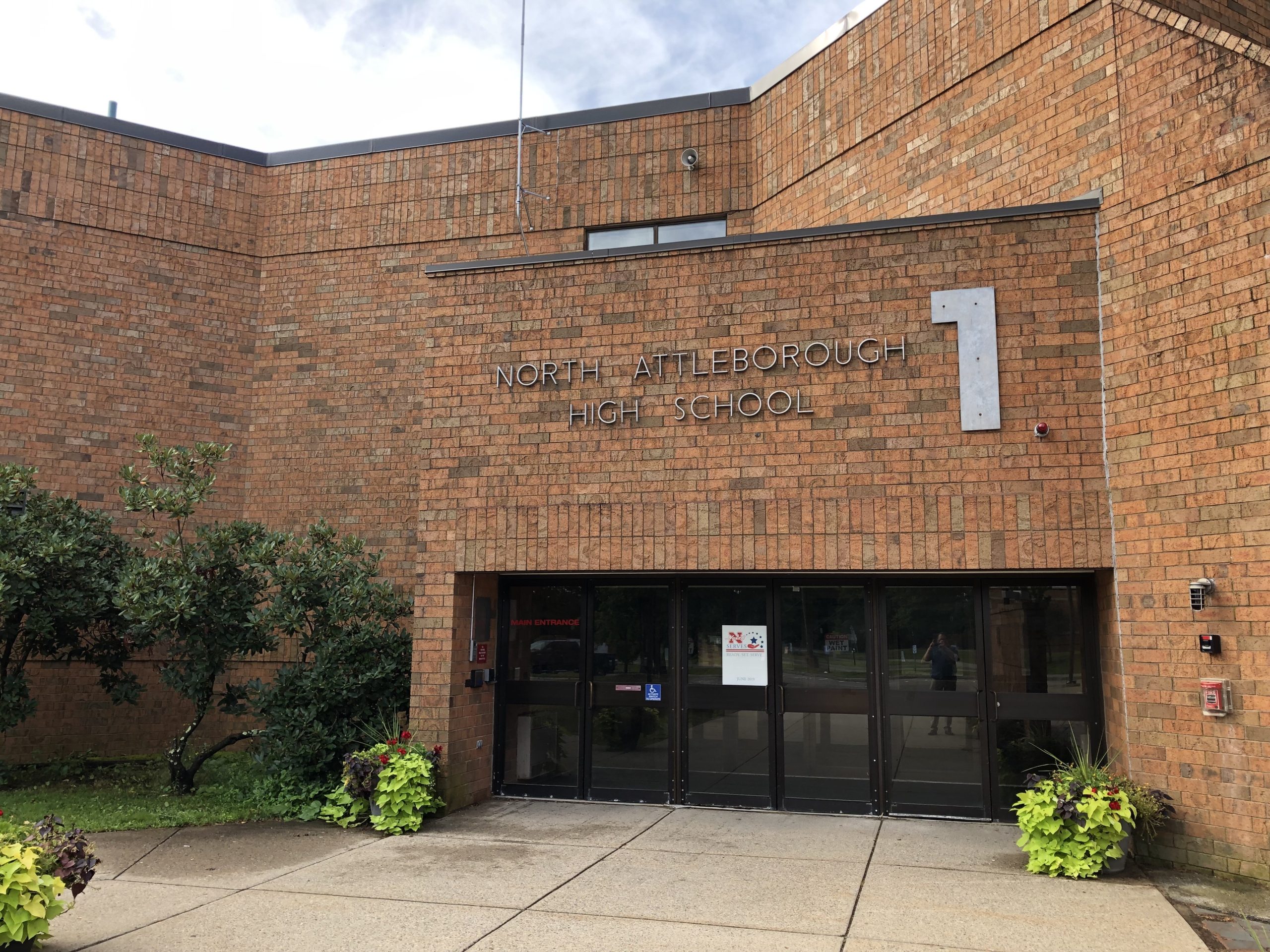
High School Principal Thomas Rizzo urged committee members to view MCAS as a starting point for inquiry, rather than a definitive measure of success.
“It’s easy to look at a graph and make a snap judgment,” said Rizzo. “But data is complex. It should make us ask questions, not rush to conclusions.”
At North Attleborough High School, 58% of students have met or exceeded state standards in ELA, with particularly strong results in reading analysis and comprehension. Rizzo said a shift toward more authentic, real-world learning has contributed to gains in other areas, including science, where 61% of students met or exceeded expectations. In math, increases of up to 21 percentage points among certain student populations were seen.
Rizzo said addressing achievement gaps among subgroups and improving coordination between schools to ensure timely sharing of student data are priorities moving forward.
“An area of improvement for us is consistent and purposeful data analysis to identify students who may be struggling – see who’s having a hard time in sixth, seventh and eighth grade – so we have a head start,” he said.
Throughout the discussion, school leaders turned to the theme of alignment – between schools, grade levels, classroom instruction and state assessments. They also stressed the importance of holding students receiving specialized instruction to the same expectations as their peers, with the appropriate supports in place.
“This team has worked hard to understand what the MCAS data really means,” he said. “We’re challenging ourselves to look more deeply and more frequently – not just for some students ,but for all. And we’re starting to see that effort pay off.”