

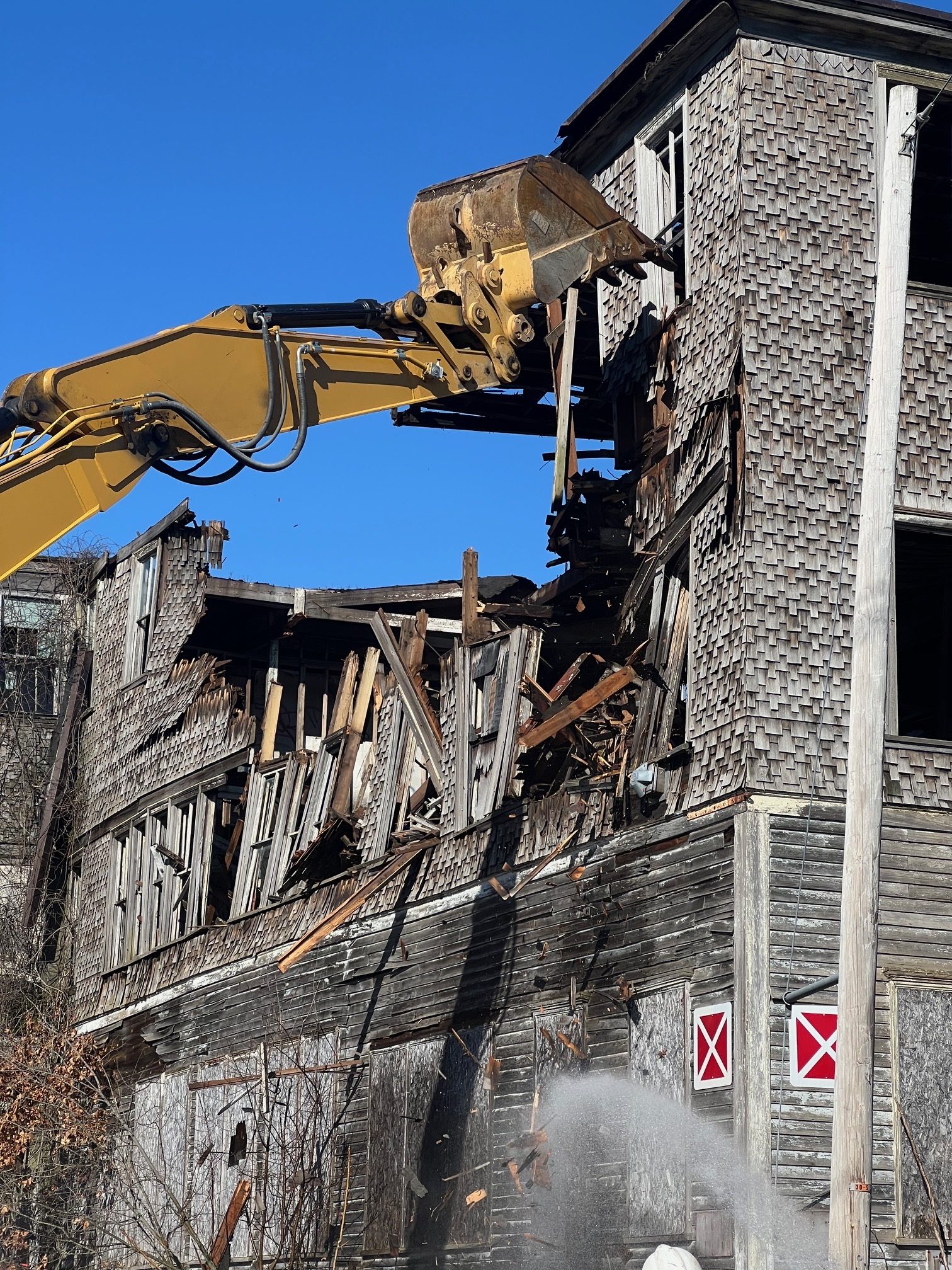
By Geena Monahan—For the North Star Reporter
Cleanup at the former Webster Mill has been put on hold once again, this time as the U.S. Environmental Protection Agency [EPA] seeks additional funding to continue removing contaminated debris.
Assistant Town Manager Antonio Morabito said the EPA paused operations Jan. 7 after briefly resuming work in early December 2025, following a prior shutdown in the fall triggered by the discovery of lead-contaminated material at the site.
Jo Anne Kittrell, a public affairs officer for EPA Region 1, said the agency will “reevaluate the situation to best address the remaining debris” and is hopeful removal can resume in the spring.
While active cleanup has stopped, Morabito said safety measures remain in place.
“The fencing will stay in place, and the debris pile will remain covered with plastic,“ he said. “However, the heavy machinery will go away for the time being.”
The latest pause comes after the EPA restarted debris removal on Dec. 3, 2025, loading asbestos- and lead-contaminated material into sealed, double-lined 10-cubic-yard bags for transport to an EPA-approved disposal facility in Alabama. According to Kittrell, approximately 1,600 tons of debris has been removed from the site as of Jan. 7.
Cleanup efforts were previously halted in fall 2025 after laboratory testing identified lead in a large debris pile created during the emergency demolition of the former silver manufacturing building in March 2024. At the time, EPA officials said the presence of lead was “not unexpected,” as contaminated soil had been mixed into the debris during consolidation.
EPA Community Involvement Coordinator Aaron Sheehan and On-Scene Coordinator Cole Hastings could not be reached for comment on the latest shutdown. However, Sheehan previously told the North Star Reporter that the lead discovery did not pose new safety risks to the public and that existing engineering controls – including wetting materials, plastic coverings, air monitoring and restricted site access – were sufficient.
The discovery of lead complicated disposal plans and required the agency to rebid portions of the work. Town Manager Michael Borg told the Town Council in October 2025 that the pause would likely delay the project by about a month and add costs, though the $4.1 million cleanup is being fully funded through the EPA.
Kittrell said additional costs associated with the lead clean-up are still unknown.
“The EPA is currently awaiting final invoices from the first round of disposal to better calculate the likely costs for disposing of the remaining waste at the site and thus to complete the project,” she said.
Despite the delays, Morabito said the town remains supportive of the EPA’s efforts.
“From the outset, the town knew that demolishing the building and remediating the site would not be a quick or easy process,” he said, adding that residents have largely expressed positive feedback about how the project has been handled.
An estimated 7,000 cubic yards — or roughly 8,000 tons – of debris in total needs to be removed from the site. EPA officials have said in the past that the project’s timeline is driven by safety considerations, rather than speed.
“We don’t do things to hurry up and get out,” said Hastings at a public meeting held in the summer of 2025.
Once surface debris removal is complete, the town plans to conduct soil testing to determine the extent of any remaining contamination and identify next steps. The town has foreclosed on the property and is in the process of having it appraised as part of the land taking process.